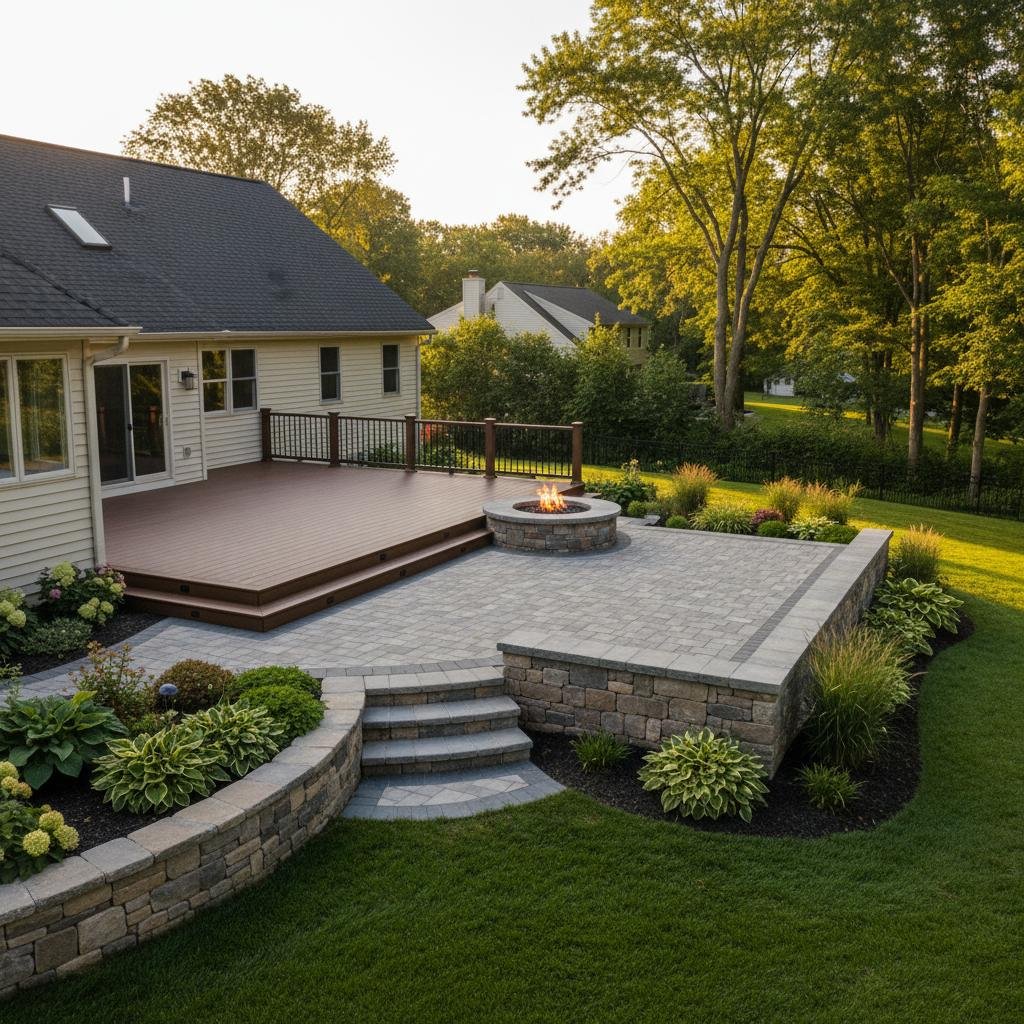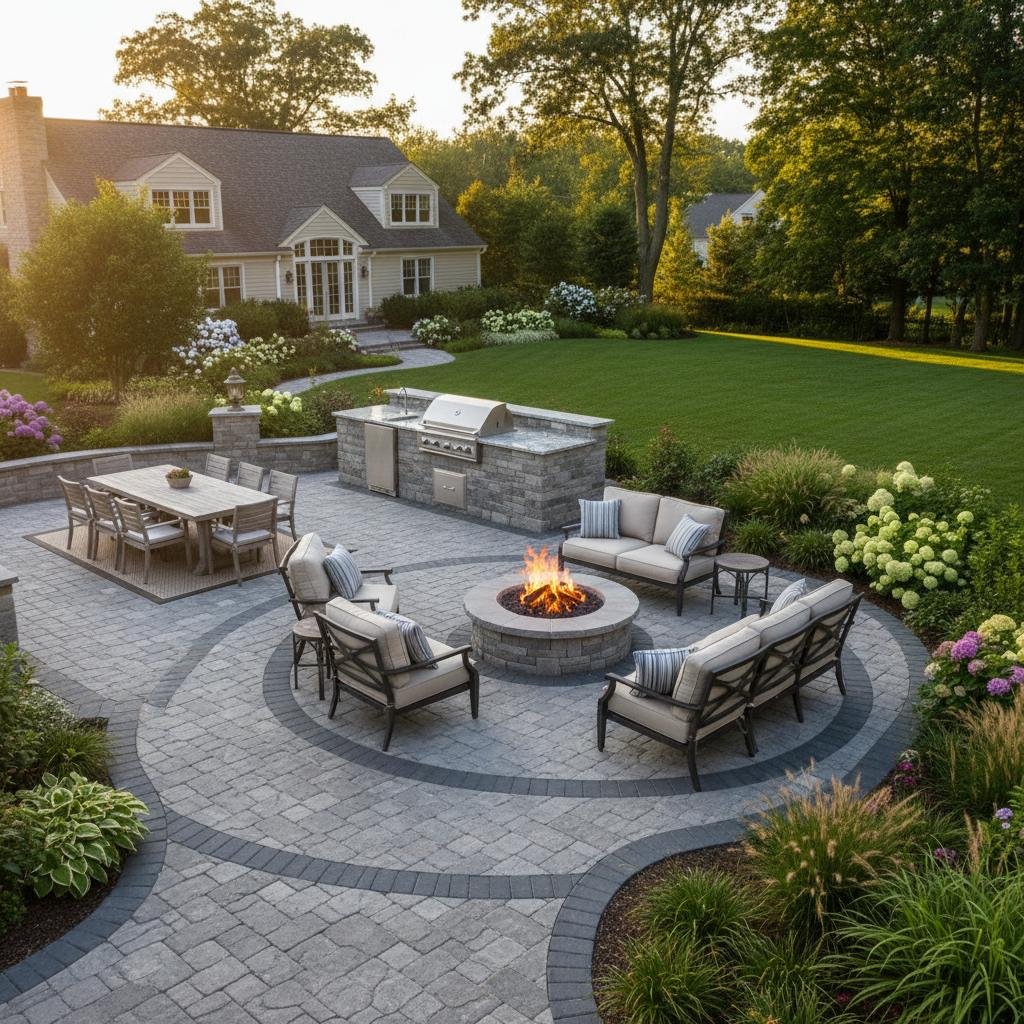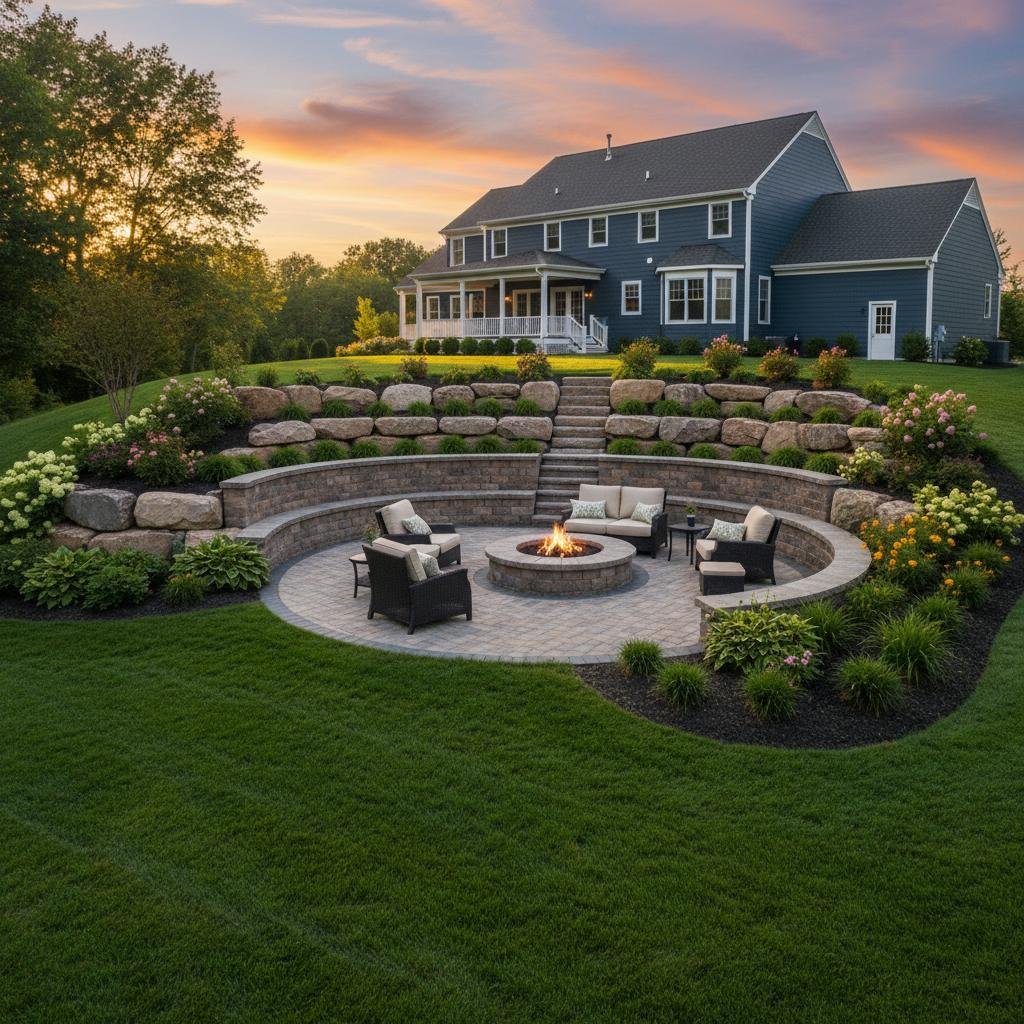

Planning an outdoor renovation starts with one practical question: when can you actually start enjoying your new space? If you are planning an upgrade to your Capital Region backyard, understanding the realistic paver patio installation time Albany NY homeowners can anticipate helps you schedule gatherings, budget effectively, and coordinate other landscape improvements without frustration. For most standard residential properties, the physical construction of a paver patio takes between 3 and 7 business days, while the entire journey—from your initial consultation through final clean-up—spans roughly 3 to 6 weeks.
Whether you are upgrading an older concrete slab in Delmar or designing an expansive custom paver patio in Guilderland, every installation moves through distinct phases. Here is an honest, detailed breakdown of how long each stage takes and the local variables that influence your project schedule.
The Phases of Paver Patio Installation Time in Albany NY
A durable, frost-resistant patio is never built overnight. In Upstate New York, our deep winter freezes and wet spring thaws mean that proper preparation is non-negotiable. Rushing the process leads to sunken stones, pooling water, and shifting borders within a season or two. A well-managed timeline breaks down into three core stages:
Phase 1: Design Consultation, Site Evaluation, and Quoting (1 to 2 Weeks)
Before any equipment arrives at your home, your contractor needs to evaluate the property. During this phase, your hardscape specialist will:
- Measure the site dimensions and calculate slope, elevation, and drainage requirements.
- Assess existing soil conditions (such as the dense clay often found in Guilderland and Latham).
- Discuss material preferences, ranging from textured concrete architectural pavers to dimensional natural stone.
- Draft a transparent, detailed scope of work and design proposal.
Homeowners who make swift decisions on paver styles, patterns, and border details can easily keep this phase on the shorter side.
Phase 2: Permitting, Material Orders, and Site Prep (1 to 3 Weeks)
Once you approve the design and deposit, your project enters the planning queue. Dedicated project management during this stage prevents on-site delays later on. Tasks handled during this window include:
- Calling in utility marks via UDig NY (Dig Safely New York) to locate buried gas, electric, and cable lines.
- Securing local municipal permits, if your patio includes attached structures, large-scale retaining walls, or sits within specific setback zones.
- Ordering and palletizing your pavers, crushed stone aggregate, and edge restraints so materials are on-site or staged at the yard before excavation starts.
Phase 3: Physical Groundwork and Installation (3 to 7 Days)
Once crews break ground, progress happens quickly. A standard 300 to 500 square foot paver patio generally takes under a week of active construction when handled by an experienced crew.
Day-by-Day: What Happens During Active Construction
To give you a clearer picture of on-site activity, here is how a standard project unfolds across a typical 4- to 5-day build:
Day 1: Demolition, Excavation, and Grading
Crews remove turf, topsoil, or cracked existing concrete. In the Albany area, excavation typically goes 7 to 9 inches deep to accommodate a sturdy sub-base that resists regional freeze-thaw cycles. Laser levels ensure the ground slopes gently away from your home’s foundation to protect your basement from runoff.
Day 2: Installing and Compacting the Aggregate Base
The foundation makes or breaks a patio. We install crushed stone (item #4 or crusher run) in shallow lifts, running heavy mechanical plate compactors over each layer. If the yard has noticeable slope variations, this is also when we construct integrated structural retaining walls to secure the patio perimeter.
Day 3: Bedding Layer and Paver Placement
A smooth, screeded layer of concrete sand or fine chip stone is laid over the dense base. Next comes the laying of the pavers according to your chosen pattern (such as herringbone, ashlar, or running bond). Cut stones are measured and trimmed around edges, columns, or home foundations using diamond-blade saws.
Day 4 to 5: Edging, Polymeric Sanding, and Final Compaction
Heavy-duty edge restraints are anchored with steel spikes along all open perimeters to prevent lateral spread. Next, polymeric sand is swept into the joints, and a padded vibratory compactor locks the pavers securely into place. Sand joints are misted with water to activate the binding polymers, which harden into a flexible, weed-resistant barrier. If your project includes add-ons like custom fire pits, sitting walls, or low-voltage lighting, this work is completed alongside final detailing.
Neighborhood Differences: From Delmar to Guilderland
Site logistics vary significantly across Capital Region communities, affecting installation speed:
Delmar and Slingerlands: When homeowners ask how long to build patio Delmar projects usually require, site accessibility is the key factor. Established neighborhoods in Delmar and Slingerlands frequently feature mature trees, narrow side-yard access between lots, or existing wooden fencing. Transporting tons of crushed stone and pallets through tight gates using compact equipment can add a day compared to a wide-open suburban yard.
Guilderland and Latham: Your Guilderland patio timeline is more likely to be influenced by soil composition. Guilderland and Latham often feature dense, heavy clay soil that retains water. In these areas, contractors must dedicate extra time to sub-surface drainage preparation, geotextile fabric installation, and deeper aggregate compaction to prevent future frost heave.
Albany and Loudonville: Historic brownstone lots in Albany present unique staging logistics, parking limitations, and soil disposal constraints. Conversely, spacious properties in Loudonville often involve larger, multi-tiered outdoor living environments that blend hardscaping with outdoor kitchens and custom step systems, naturally extending the on-site timeline to 8 to 12 days.
Key Factors That Can Shift Your Albany Hardscape Schedule
Even with rigorous project planning, outside variables can occasionally alter your Albany hardscape schedule:
- Upstate Weather: Paver bases cannot be properly compacted in pooling rainwater or deep mud. A continuous summer downpour or late-season spring freeze might delay excavation by 24 to 48 hours to ensure long-term structural integrity.
- Buried Surprises: Unmarked irrigation lines, old buried tree stumps, or forgotten construction debris buried by homebuilders decades ago require careful removal before base prep can continue.
- Mid-Project Design Revisions: Deciding to expand your patio footprint by 150 square feet or adding a sitting bench halfway through the build requires additional material deliveries and labor hours.
- Material Availability: Specialized or imported natural stone products may have longer delivery lead times than regionally sourced concrete pavers from major manufacturers like Unilock or Techo-Bloc.
How Homeowners Can Keep Their Project on Schedule
You can play an active role in keeping your installation on track. Finalize paver selections and layout patterns during the initial quote phase so materials can be ordered without delay. Ensure your contractor has open access to outdoor spigots, electrical outlets, and driveways for equipment staging. Lastly, schedule your project early in the season; spring and early summer dates in the Capital Region book up quickly, so reaching out before the peak rush guarantees your spot on the installation calendar.
A beautifully executed paver patio adds tremendous curb appeal and transforms your backyard into an inviting outdoor living retreat for decades to come. With proper site evaluation, high-grade base materials, and experienced project management, the actual disruption to your home is minimal—leaving you with a flawless space ready for family cookouts and relaxed evenings.
Ready to transform your yard? Contact Eldi Pro Hardscaping LLC today to discuss your project vision and get a free, detailed estimate for your Capital Region property.