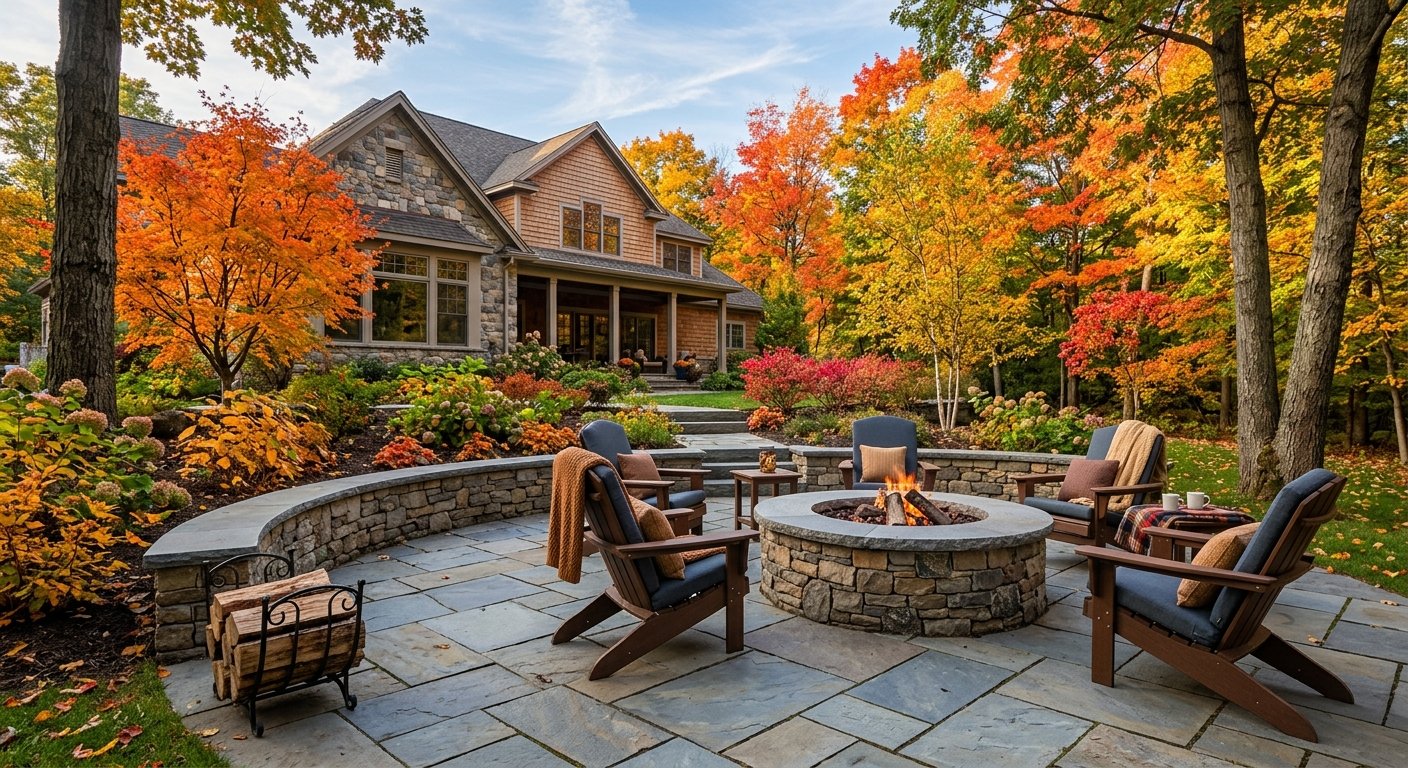
Winter in the Capital Region does not go easy on outdoor hardscapes. Between sub-zero cold snaps, sudden February thaws, and relentless lake-effect precipitation, selecting the best pavers for Albany NY winters comes down to structural science rather than mere curb appeal. A surface that looks stunning in June can crack, flake, or heave by March if the material cannot handle regional temperature swings.
Whether you are upgrading an entryway in Loudonville or installing a backyard retreat in Slingerlands, your investment hinges on how well your hardscape resists moisture penetration and ground movement. Here is an in-depth breakdown of how concrete, brick, and natural stone perform through Upstate New York winters, alongside the installation and maintenance practices needed to ensure they last for decades.
Understanding the Capital Region Freeze–Thaw Cycle
Before evaluating materials, it helps to understand what actually destroys outdoor surfaces in our area. The primary threat to hardscaping across Albany, Latham, and Newtonville is not the snow sitting on top of the stones—it is water expanding inside them.
When water freezes, its volume increases by roughly 9%. If moisture penetrates the micro-pores of a paver and freezes overnight, that internal expansion creates tremendous tensile stress. Over dozens of cycles throughout a single winter, lower-grade paving materials will begin to spall (chip and flake), crack along natural fault lines, or crumble at the edges. Additionally, saturated soils freeze from the top down, creating frost lenses that heave poorly installed base layers out of level. Investing in engineered freeze–thaw pavers in Albany ensures your surface can endure these harsh forces without structural failure.
How Concrete, Brick, and Natural Stone Compare for Freeze–Thaw Durability
Every paver material handles thermal shock, moisture absorption, and de-icing chemicals differently. When planning new paver patios or front walkways, here is how the top three choices stack up.
1. Interlocking Concrete Pavers (The Cold-Climate Standard)
Modern interlocking concrete pavers are manufactured under extreme hydraulic pressure, resulting in an exceptionally dense product designed specifically for harsh northern climates. While standard poured concrete typically tests at 3,000 to 4,000 PSI (pounds per square inch) with an absorption rate above 8%, high-performance interlocking pavers routinely exceed 8,000 to 10,000 PSI with water absorption rates well below 5%.
Because the absorption rate is so low, minimal water enters the body of the paver, largely neutralizing the risk of internal freeze damage. Furthermore, the segmented nature of an interlocking system distributes ground movement across flexible joints rather than forcing a single rigid slab to bear frost heave stresses. For homeowners researching winter‑proof patio pavers in Guilderland, where heavy clay subsoils can hold excess moisture, high-density concrete units from reputable manufacturers provide predictable, multi-decade performance.
2. Clay Brick Pavers (Timeless and Resilient)
Clay brick brings historic character that looks right at home in classic neighborhoods throughout Delmar and Newtonville. However, there is a distinct difference between standard chimney/facing brick and true paving brick.
Architectural clay pavers are vitrified—fired at extreme temperatures until the clay particles fuse into a dense, ceramic-like matrix. True vitrified pavers have excellent freeze-thaw resistance, high compressive strength, and rich, permanent color that will never fade. On the other hand, salvaged or architectural facing bricks used improperly on horizontal surfaces will absorb standing water and split open after their first harsh season. If you prefer clay for classic pathway pavers and bricks, always verify that the units meet ASTM C902 or ASTM C1272 specifications for pedestrian and light vehicular traffic in severe weathering environments.
3. Natural Stone (Bluestone, Granite, and Sandstone)
When assessing a premium Delmar paver material, natural stone is frequently at the top of the list for its organic elegance and distinctive texture. That said, not all stone varieties perform identically in freezing conditions:
- Granite: Virtually impervious to water absorption (often under 0.5%), impervious to salt, and virtually indestructible. It is one of the premier materials for Upstate winters, though it carries a higher price point.
- Thermal Bluestone: Sawn-edge, thermally treated Pennsylvania or New York bluestone performs very well because the thermal finishing process creates a uniform, slip-resistant surface. However, untreated or lower-tier bluestone contains natural cleft layers (planes of shale/clay) that can absorb moisture and delaminate (flake off in sheets) over repeated freezes.
- Limestone & Porous Sandstone: Softer stones with high porosity should generally be avoided for horizontal outdoor surfaces in the Capital Region unless they carry proven freeze-thaw certifications.
To capture the authentic aesthetic of regional geology without risking premature surface erosion, professional installation of graded natural stone work is essential.
The Hidden Factor: Sub-Bases and Polymeric Joint Sand
Selecting the best pavers for Albany NY winters is only half the battle. A top-tier paver will still fail if the ground beneath it shifts or if water sits trapped along its joints.
Sub-Base Depth and Drainage
In regions like Guilderland and Slingerlands, native soils often contain high concentrations of dense clay that retain water. When this clay freezes, it expands dramatically, forcing surface pavers upward. To prevent this, standard 4-inch paver bases are insufficient. Capital Region hardscapes require an excavation depth of 8 to 12 inches, backfilled with angular crushed stone (such as NYSDOT Item 4 or crushed clean aggregate) that is mechanically compacted in lifts. This creates a rock-solid, free-draining foundation that channels groundwater safely below the surface.
Polymeric Sand vs. Traditional Joint Fill
Old-fashioned stone dust or regular sand washes away easily, allowing melting snow and ice melt to pour straight between your pavers. Advanced polymeric sand contains specialized chemical binders that activate with water. Once cured, it forms an elastomeric joint that expands and contracts with shifting winter temperatures while keeping water, weed roots, and burrowing insects out. By repelling water at the surface, polymeric sand prevents pooling in the joint space, protecting the paver edges from chipping during rapid freeze cycles.
Sealing and Maintenance for Long-Term Winter Protection
Routine sealing & maintenance plays a major role in preserving the structural integrity and aesthetic vibrance of Capital Region walkways and patios. While high-grade pavers are resilient on their own, applying a breathable, penetrating sealer (such as a silane- or siloxane-based formula) forms a hydrophobic barrier beneath the surface without trapping interior vapor.
Sealing also guards against the abrasive chemicals often used during winter. De-icing methods across Albany, Latham, and surrounding towns can be harsh on masonry:
- Avoid Standard Rock Salt (Sodium Chloride): Rock salt can chemically attack unsealed concrete surfaces and leave unsightly white efflorescence deposits.
- Choose Calcium Magnesium Acetate (CMA): CMA is significantly gentler on concrete, brick, and surrounding plant life while remaining effective down to zero degrees.
- Rely on Traction Rather Than Melting: Spreading clean masonry sand or coarse grit over slippery walkways is the safest approach to winter slip resistance without exposing paving surfaces to caustic salts.
- Use Plastic-Edged Shovels: Metal shovel blades and snowblower skids can gouge textured paver finishes and chip joint seals. Always utilize rubber or plastic wear bars when clearing snow.
Build a Winter-Proof Outdoor Space in the Capital Region
Investing in quality hardscaping adds substantial value and year-round beauty to your property, but surviving an Albany winter demands precise material selection and uncompromising craftsmanship. Whether you prefer the sleek durability of interlocking concrete, the rich warmth of fired brick, or the timeless majesty of natural stone, building to cold-climate specifications ensures your patio stands firm season after season.
Ready to design an outdoor living space built to withstand the harshest New York winters? Contact Eldi Pro Hardscaping LLC today to schedule a consultation and get a free, detailed quote for your next project.