When homeowners begin planning a custom outdoor kitchen in Albany, NY, one question frequently comes up: can you build one year-round? Living in the Capital District means adapting to dramatic seasonal shifts, from humid July afternoons to sub-zero January mornings. While the short answer is that construction can technically occur in winter under strict temporary enclosures, the realistic answer for efficiency, structural integrity, and cost is much more nuanced.
Planning an Outdoor Kitchen in Albany, NY: The Seasonal Reality
In Upstate New York, outdoor kitchen construction relies heavily on wet trades—specifically pouring concrete footings, laying masonry block, troweling veneer stone, and jointing pavers. These materials perform best when temperatures remain consistently above 40°F.
Here is how the four seasons play out for outdoor kitchen projects across Albany, Loudonville, and Latham:
- Spring (April to May): The ground thaws and construction season kicks into high gear. While early spring rain can occasionally slow excavation, it is a prime time to break ground so your kitchen is ready for summer entertaining.
- Summer (June to August): The ideal building window. Long daylight hours and dry weather allow masonry, counter fabrication, and utility tie-ins to move forward without weather-related halts.
- Autumn (September to November): Many homeowners consider fall the golden window. Ground conditions are stable, humidity is lower, and crews can work comfortably. A fall installation ensures your outdoor living space is fully settled and ready for early spring use.
- Winter (December to March): Active building largely pauses. Digging deep footers into ground frozen 36 to 48 inches deep is cost-prohibitive, and curing mortar in freezing conditions requires heated tenting that dramatically drives up labor costs. However, winter is the best time for architectural design, 3D renderings, material selection, and pulling local municipal permits.
Why Winter Hardscaping Is Problematic in Upstate New York
The Capital Region experiences heavy freeze-thaw cycles. When water in the soil freezes, it expands, causing the ground to shift—a phenomenon known as frost heave. An outdoor cooking island with built-in appliances, stone countertops, and gas lines cannot tolerate shifting soils.
To build a lasting structure, footings must sit below the local frost depth (typically 42 to 48 inches in Albany County). Excavating through frozen ground requires heavy equipment that tears up turf, while cold temperatures weaken mortar bonds before they cure to full compressive strength. While an experienced contractor can work in cold weather using thermal blankets, anti-freezing mortar additives, and ground-thawing heaters, these measures add substantial expenses that are usually better spent on upgraded kitchen appliances or premium finishes.
The Core Services: Integrating Patios, Pavers, and Foundations
An outdoor cooking station does not exist in isolation; it requires a stable, level foundation designed to support thousands of pounds of stone, steel, and granite. Most projects are integrated into broader outdoor living renovations.
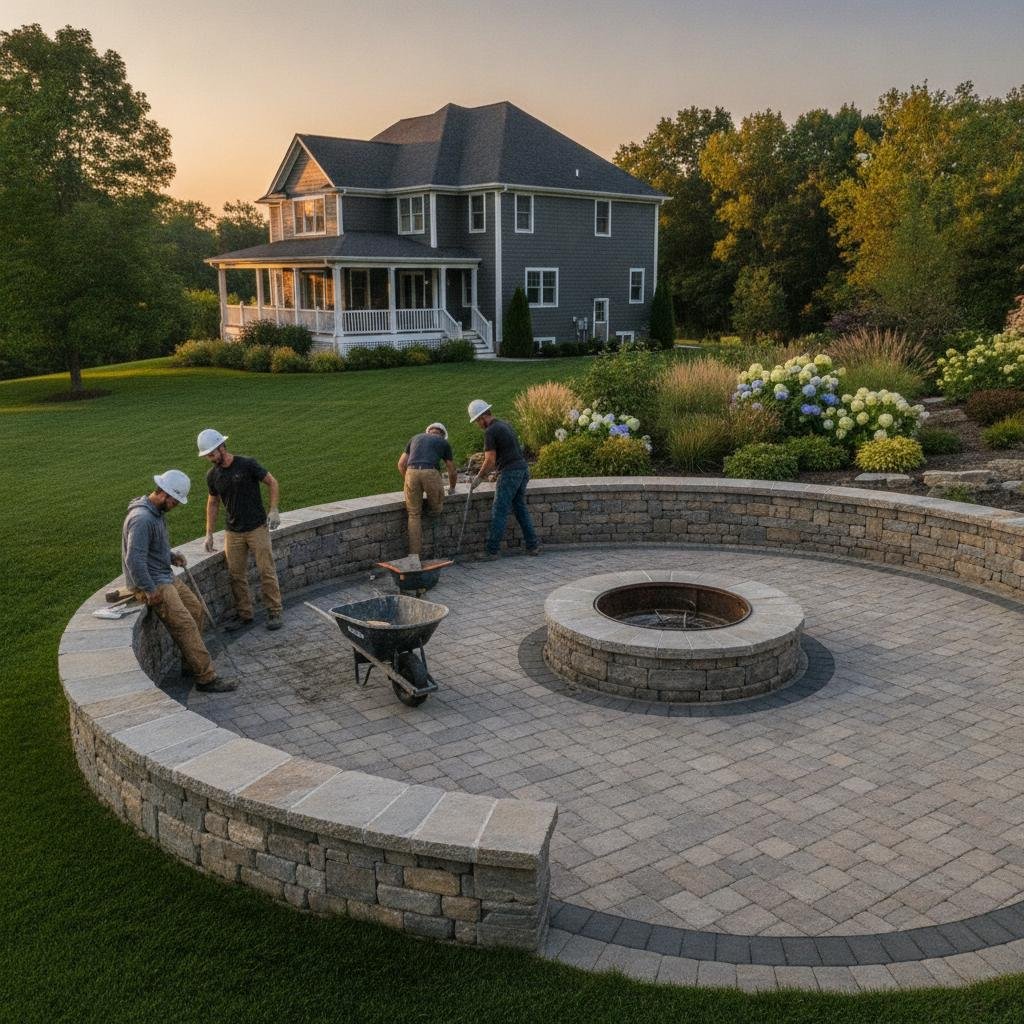
Before laying a single block for your cooking island, the base must be engineered. Installing durable patio pavers underneath and surrounding the structure ensures water drains away from cabinetry and appliances. If you are building on a sloped backyard in Slingerlands or Delmar, retaining walls or stepped stone platforms may also be necessary to carve out a functional, flat cooking and dining footprint.
Many homeowners also like to combine their cooking islands with adjacent warmth features. Adding custom fire pits or outdoor fireplaces extends the outdoor entertaining season well into November and December, giving you a cozy place to gather while the grill stays fired up.
Utility Considerations: Plumbing and Electrical in Cold Climates
Constructing an outdoor kitchen involves far more than assembling stone and stainless steel; utilities are the lifeblood of a functional kitchen, and cold-climate engineering is mandatory.
Plumbing and Freeze Protection
An outdoor sink, ice maker, or beverage center requires dedicated supply lines and drainage. In the Capital Region, exterior water lines must be winterized every autumn. During construction, lines should be installed with gentle pitch toward an indoor shut-off valve with a drain waste bleeder or low-point blow-out valve. This allows you to blow compressed air through the pipes before the first hard freeze in October or November, preventing catastrophic pipe bursts inside your masonry island.
Electrical Circuits and Grounding
Running refrigerators, rotisserie motors, task lighting, and countertop outlets requires outdoor-rated electrical service. Trenching for electrical conduit must comply with Albany and Town of Guilderland building codes, requiring trench depths usually between 18 and 24 inches depending on conduit type. All outdoor receptacles must feature GFCI protection and weatherproof-in-use (bubble) covers.
Gas Lines
While some homeowners opt for 20-pound propane tanks, hard-piping natural gas directly from the home provides continuous fuel without tank swaps. Gas trenches must run below local code-mandated depths and should be planned early in the patio excavation phase to avoid cutting into freshly laid paver bases later.
Backyard Kitchen Cost in Albany: Simple vs. Full Kitchens
Budgeting accurately requires understanding how scope, materials, and utilities impact the bottom line. When evaluating your backyard kitchen cost Albany options, projects generally fall into two categories:
1. Simple Grill Islands & Prep Stations ($8,000 – $20,000)
A compact installation designed primarily for straightforward grilling and food preparation. These builds usually include:
- A 6- to 8-foot linear masonry or framed island with stone veneer.
- Drop-in premium gas grill cut-out.
- Stainless steel double access doors.
- Durable granite, bluestone, or concrete countertops.
- Basic electrical outlet for rotisserie or task lighting.
This setup works well for townhomes in Latham or smaller residential yards where space and budget are focused on maximizing cooking efficiency.
2. Full Luxury Outdoor Living Suites ($25,000 – $60,000+)
A comprehensive culinary and entertaining hub, such as a complete Delmar patio kitchen or an expansive Guilderland outdoor kitchen tailored for hosting large gatherings. These setups frequently feature:
- L-shaped or U-shaped counters (12 to 20+ linear feet) with integrated bar seating.
- Built-in multi-burner grills, side burners, and ceramic smoker/pizza oven stations.
- Under-counter outdoor refrigerators, wine coolers, and stainless trash pull-outs.
- Integrated sinks with hot/cold plumbing and dedicated drainage.
- Overhead pergolas, under-counter LED strip lighting, and speaker mounts.
- Seamless transition into surrounding paver patios and fire features.
When Should You Start Your Project?
If your goal is to cook outside by Memorial Day, do not wait until April to call a hardscaper. Top-tier contractors in Albany, Loudonville, and Slingerlands typically fill their spring calendars by mid-winter. Starting your design consultations, site surveys, and utility plans in January or February ensures permits are cleared and materials are staged the moment the ground thaws.
Building an outdoor kitchen is an investment that increases property value, expands your usable square footage, and completely transforms how you enjoy your property during Upstate New York’s beautiful warmer months.
Ready to start planning your outdoor cooking space? The team at Eldi Pro Hardscaping brings craftsmanship, structural precision, and deep local knowledge to every project. Contact us today for a free consultation and personalized quote.