If you are planning to upgrade your backyard with a stone patio, an outdoor kitchen, or structural terracing, you are probably wondering whether City Hall needs to get involved. Navigating the rules for a hardscape permit in Troy NY and neighboring Rensselaer County communities can feel overwhelming, especially since building codes, zoning setbacks, and historic district guidelines vary from one side of the Hudson River to the other. Skipping the permitting process can lead to stop-work orders, costly fines, or having to tear out finished stonework, so understanding local codes before breaking ground is essential.
Understanding Local Hardscaping Regulations Across the Capital Region
In New York’s Capital District, whether you need a permit depends on three primary factors: structural safety, stormwater runoff management, and property line setbacks. An on-grade walkway rarely triggers a building inspection, but major earthmoving or elevated structures almost always do.
Different municipalities enforce distinct codes:
- City of Troy: Troy features diverse topography, from downtown river flats to steep residential hillsides in Eastside, Frear Park, and Sycaway. Slope stabilization projects, significant grade changes, and properties located in historic districts often require municipal review.
- City of Rensselaer: If you are planning an expansive entertaining space, getting a Rensselaer patio permit or zoning variance may be mandatory if your plans exceed local lot-coverage thresholds for impervious surfaces.
- East Greenbush: Suburban properties frequently feature rolling acreage or dramatic drop-offs. If your landscape requires an East Greenbush retaining wall permit, the town building department will check footing depth, engineered reinforcement, and drainage to protect neighboring parcels from water runoff.
- Cohoes & Watervliet: Across the river, navigating Cohoes hardscape rules and Watervliet building codes means paying close attention to tight lot lines, shared drainage corridors, and historic infrastructure.
- West Sand Lake: In more rural parts of Rensselaer County, projects frequently interact with private septic fields, wellhead protection buffers, and conservation easements that dictate where you can build.
When Do You Need a Hardscape Permit in Troy, NY?
The City of Troy Bureau of Code Enforcement regulates exterior structural modifications. While simple surface repairs rarely demand oversight, you will almost certainly need a hardscape permit in Troy, NY under the following circumstances:
1. Retaining Walls Exceeding Four Feet
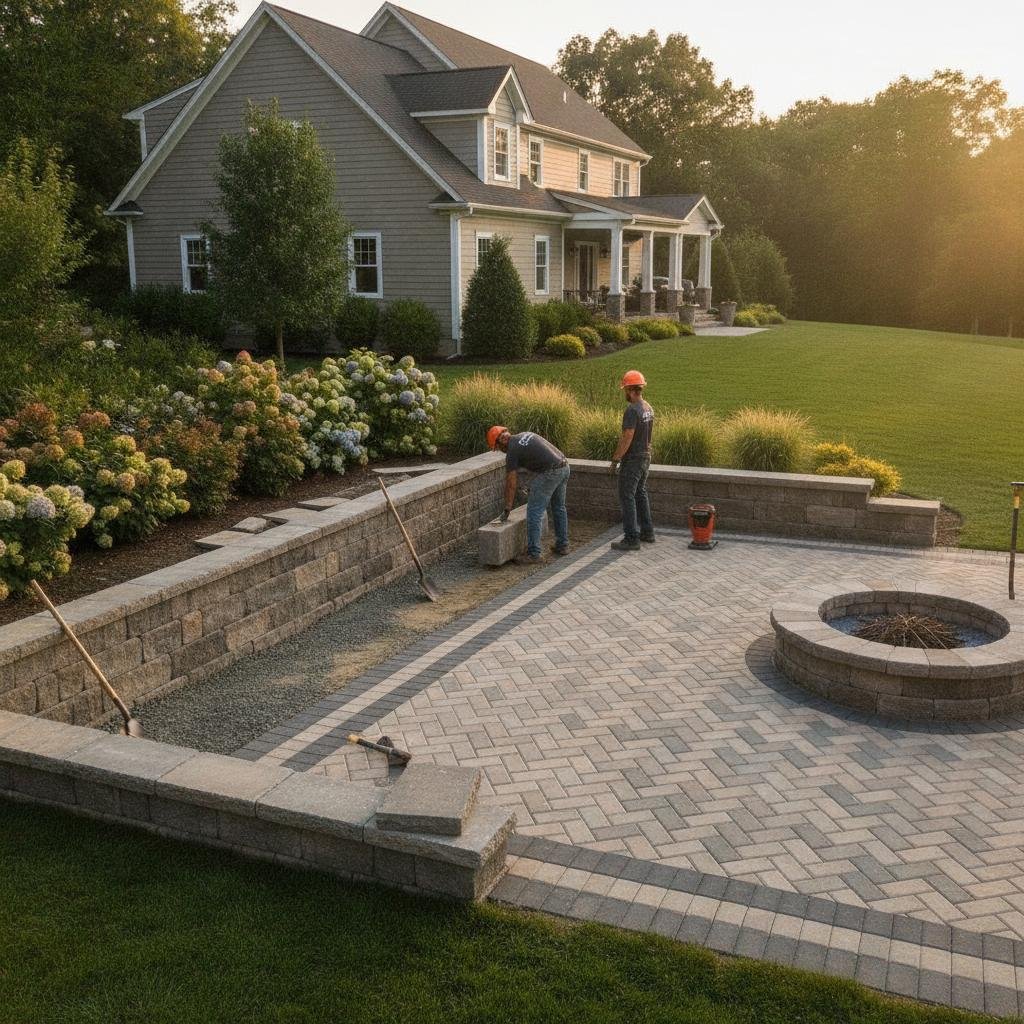
Under the New York State Uniform Fire Prevention and Building Code, which Troy enforces, any retaining wall supporting four feet or more of unbalanced backfill—measured from the bottom of the footing to the top of the wall—requires a building permit and stamped engineering plans. Even shorter walls often need permits if they support an extra load, such as a driveway, patio surcharge, or steep slope above.
Proper construction prevents catastrophic washouts. When we construct structural retaining walls, we engineer stable gravel bases, geogrid reinforcement, and integrated drainage pipes to guarantee your hillside stays securely anchored.
2. High-Elevation Patios and Terraces
Flat, ground-level pavers rarely need a building permit because they do not pose fall risks or change structural loads. However, if your backyard drops away and your new patio sits elevated more than 30 inches above the surrounding ground, building codes treat it similarly to a deck. That means Troy code enforcement will evaluate railings, frost-protected footings, and load-bearing sub-bases.
3. Historic District Constraints
Troy takes immense pride in its historic architecture. If your home sits in a recognized historic district, such as downtown Troy, Washington Park, or parts of the Fifth Avenue corridor, any visible exterior changes may require review by the Troy Historic Commission. This includes replacing historic brownstone steps with modern units, installing front-yard retaining curbs, or laying prominent walkways.
4. Impervious Surface Caps and Drainage Changes
Dense urban parcels have strict limits on how much surface area can shed rain directly into municipal storm sewers. Laying hundreds of square feet of poured concrete or tight flagstone could push your property over its impervious surface limit. Using modern permeable interlocking pavers or designing dedicated dry wells often resolves these concerns while maintaining code compliance.
Patios and Walkways: What Rensselaer County Towns Look For
When installing patio pavers in towns like Rensselaer, East Greenbush, or North Greenbush, zoning officers focus predominantly on setbacks. Every residential zone designates minimum distances that permanent structures must keep from side and rear lot lines.
For instance, while you might want your outdoor dining terrace tucked right against the privacy hedge, municipal rules might mandate a five-to-ten-foot buffer from your neighbor’s property line. Furthermore, burying downspout extensions or altering grades cannot channel water toward adjacent foundations. Planning these drainage paths correctly from the beginning protects your investment and maintains peaceful neighborhood relations.
How Eldi Pro Hardscaping Handles the Design and Permit Process
Homeowners often dread dealing with paperwork, architectural drawings, and visits to the local planning office. At Eldi Pro Hardscaping, we eliminate the stress by managing every detail from initial concept through final inspection.
Here is how our seamless design and permitting workflow operates:
- Site Assessment & Property Lines: We begin by examining your boundary surveys, identifying utility easements, reviewing soil conditions, and checking local setback ordinances for your specific parcel.
- Custom Hardscape Design: We draft scaled site layouts that clearly illustrate materials, elevations, drainage solutions, and property line clearances.
- Submitting Applications: We prepare and submit all required application packets to municipal offices in Troy, Rensselaer, East Greenbush, or surrounding towns, coordinating directly with code officials to answer technical questions.
- Engineering Coordination: If your project involves a tall retaining wall or elevated terrace requiring stamped structural engineering calculations, we handle those details with certified professionals.
- Building to Code: Our crews construct your outdoor living space precisely according to the approved plans, scheduling any required municipal inspections before closing out the job.
Start Your Capital Region Hardscaping Project Today
Investing in your outdoor living space should be an exciting journey, not a bureaucratic headache. Whether you envision a tiered garden wall in West Sand Lake, a custom fire pit in Watervliet, or a complete backyard renovation in downtown Troy, working with an experienced local contractor ensures your installation is both stunning and fully code-compliant.
Explore our complete range of exterior services to discover what is possible for your property. When you are ready to bring your vision to life without the permit hassles, contact us today for a detailed consultation and free project estimate.