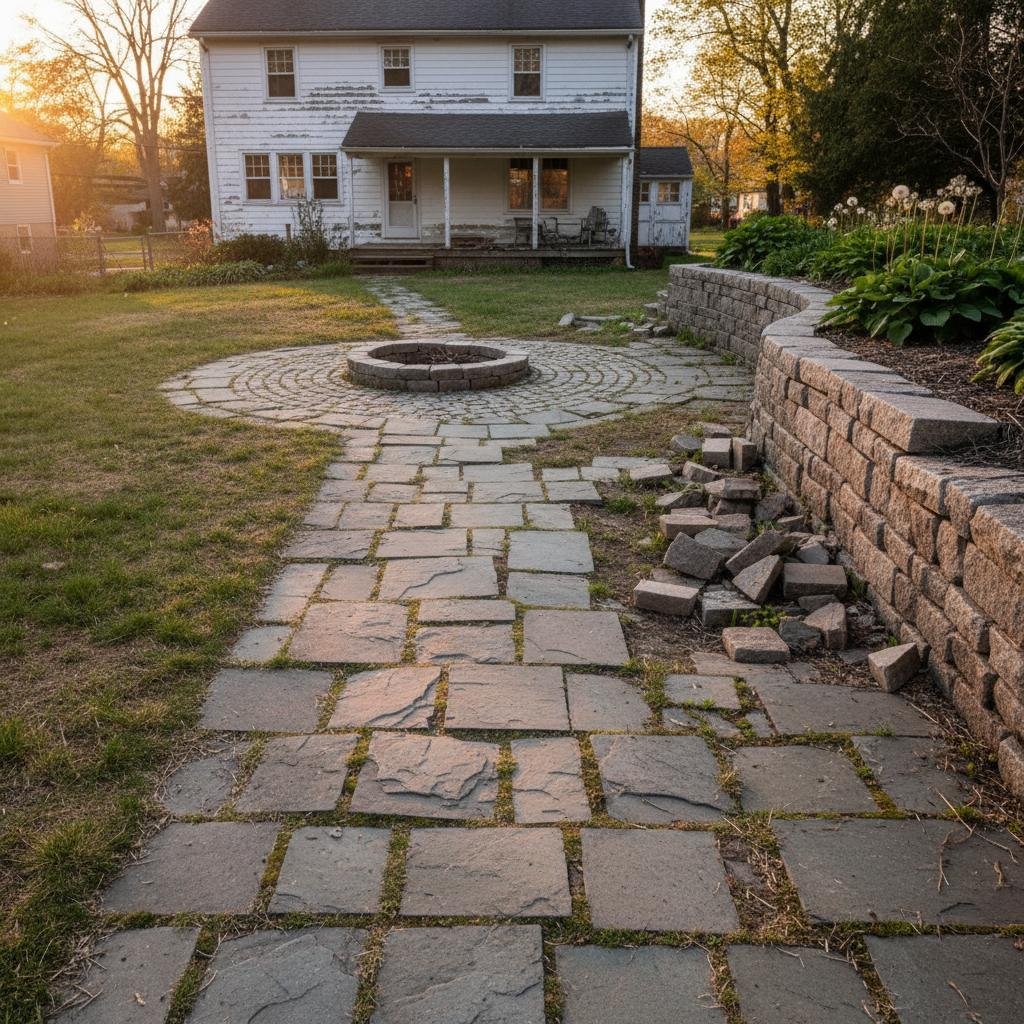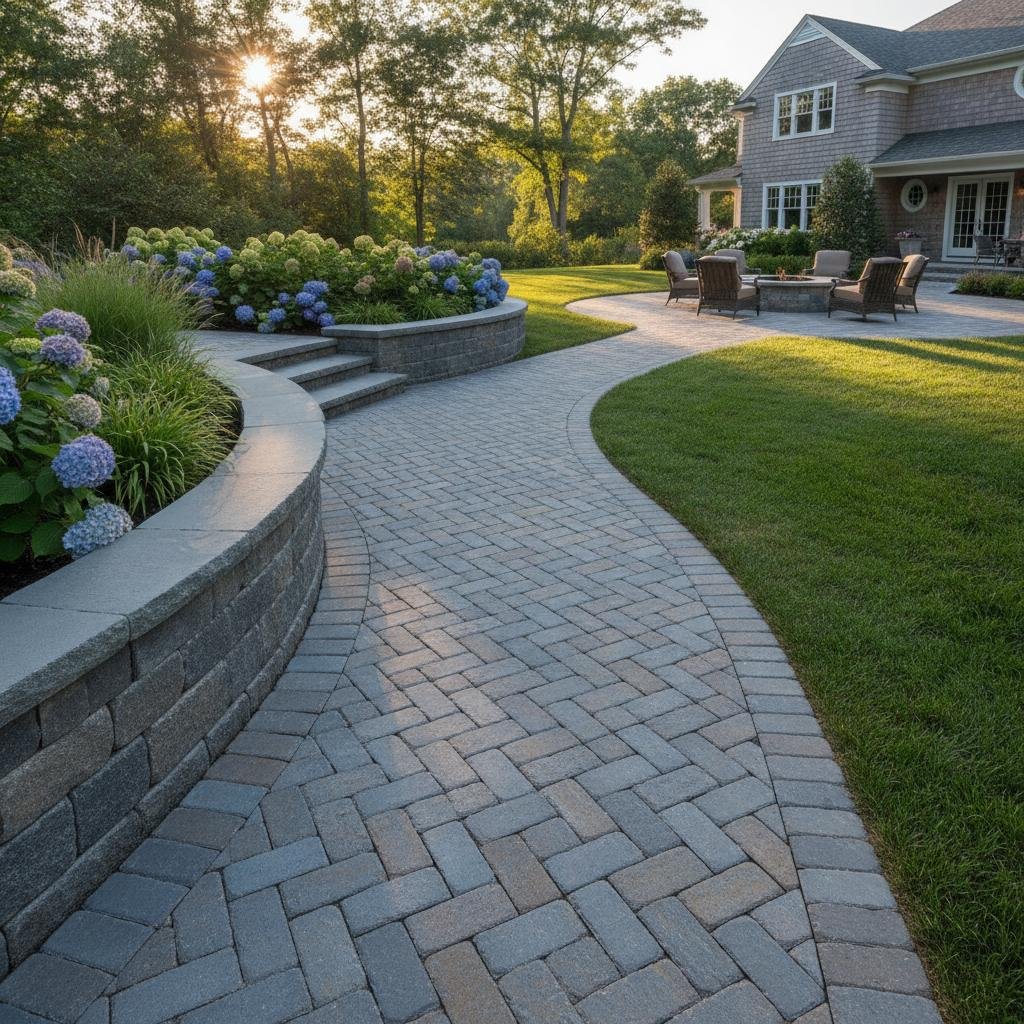

When heavy spring rains arrive or winter snowpacks melt, thousands of homeowners across the Capital Region find their lawns transforming into muddy bogs. Standing water near foundations, marshy turf, and saturated flower beds are not just cosmetic annoyances—they cause structural hazards and soil erosion. Implementing purposeful hardscaping drainage in Albany, NY allows you to reclaim unusable yard space, protect home foundations, and build beautiful outdoor living areas that manage runoff naturally.
Why Capital Region Properties Struggle with Water Runoff
To fix drainage issues permanently, you have to understand the specific soil and geographic challenges of our area. Much of Albany County sits atop dense, glacially deposited clay. Unlike sandy coastal soil that absorbs moisture quickly, local clay acts like an impermeable barrier once saturated. Water gathers on the surface, unable to percolate downward.
Topography further compounds these conditions. Properties in rolling neighborhoods throughout Loudonville, Slingerlands, and Newtonville frequently receive runoff from neighboring uphill lots. When combined with severe winter freeze-thaw cycles, poor drainage leads to ground heaving, cracked masonry, and sunken paver surfaces. Whether you are dealing with a spongy lawn in spring or ice sheets in winter, fixing the problem requires engineering the landscape rather than merely tossing down grass seed.
The Anatomy of Effective Hardscaping Drainage in Albany, NY
Hardscaping is far more than setting stones in sand. Below every finished patio, walkway, and wall sits an engineered drainage system designed to redirect gallons of surface and subsurface water away from living spaces.
1. Precise Sub-Base Grading and Slope
Every hardscape installation begins with grading. To prevent water from pooling near foundations or sitting under stones, hardscaped surfaces must maintain a minimum slope of 1/4 inch per linear foot away from residential structures. During site excavation, operators contour the subsoil to establish natural flow channels, ensuring water moves decisively toward designated catch basins, swales, or municipal storm connections.
2. Open-Graded Crushed Stone Bases
Standard building sand traps moisture, which accelerates paver settlement during Albany’s freezing winters. Modern hardscape drainage relies on washed, open-graded angular stone (such as NYS DOT #57 crushed limestone). These clean aggregate stones leave void spaces between individual rocks, acting as a sub-surface reservoir that allows storm runoff to drain freely into subsoils rather than washing out jointing sand or pooling above.
3. Geotextile Separation Fabrics
Because Albany-area subsoil is rich in fine silt and clay, heavy rain tends to push native mud upward into clean gravel bases, clogging drainage voids over time. Installing commercial-grade non-woven geotextile fabric between native clay and aggregate base foundations prevents contamination and maintains optimal drainage capacity for decades.
Overcoming Guilderland Retaining Wall Drainage Challenges
Sloped lots along the Pine Bush transition zone and hilly terrain make retaining walls essential for leveling usable outdoor living spaces. However, retaining walls hold back more than soil; they hold back tremendous hydraulic pressure. Water trapped behind a solid wall exerts hydrostatic pressure that can easily bow or collapse concrete blocks within just a few seasons.
Mastering Guilderland retaining wall drainage requires specialized subterranean techniques:
- Perforated Drain Pipe: A continuous schedule-40 or corrugated drain tile wrapped in aggregate and filter fabric is positioned at the wall footing to gather collected groundwater.
- Free-Draining Gravel Backfill: A minimum 12-inch column of washed crushed stone must be placed directly behind our engineered retaining walls to facilitate rapid downward water movement to the drain pipe.
- Weep Holes: Strategically positioned exit ports at the wall base relieve remaining hydrostatic pressure during severe rainstorms or rapid thaws.
Eliminating Patio Water Issues in Albany Properties
Patios frequently become unintentional collection basins when installed without careful elevation planning. Homeowners dealing with patio water issues Albany-wide typically report two primary problems: water pooling in the center of the patio, or runoff flowing back toward the home’s foundation or basement windows.
We address these vulnerabilities through multiple integrated drainage solutions:
- Permeable Paver Systems: Engineered pavers built with widened joints allow high-volume rain events to filter immediately between pavers into an underground gravel storage reservoir, eliminating surface ponding completely.
- Linear Trench & Channel Drains: When building modern custom patio pavers against existing door thresholds or garage aprons, low-profile channel drains collect sheet flow before it enters the home and channel it safely away underground.
- Subsurface Dry Wells: For tight suburban lots in Latham or Delmar where runoff cannot simply be discharged into a neighboring yard, underground dry well chambers hold storm runoff temporarily while it percolates naturally into the soil.
Upgrading Walkways and Solving Yard Drainage in Delmar
In older established communities like Delmar, mature tree canopies and flat terrain often trap standing water along footpaths and lawn edges. Resolving persistent yard drainage Delmar challenges requires integrating functional drainage alongside everyday hardscape features.
Installing permeable paver walkways and brick paths offers an opportunity to install hidden French drains beneath the path’s edge. By combining natural stone pathways with shallow decorative gravel swales, water that formerly flooded lawns is guided smoothly along the landscape boundary without eroding planting beds.
Real Capital Region Drainage Solutions: Case Studies
Every neighborhood presents unique conditions. Here is how custom hardscape engineering resolved water headaches on two local properties:
The Slingerlands Hillside Remediation
A Slingerlands homeowner experienced heavy sheet runoff cascading down an uneven hillside toward their walkout basement door every spring. Eldi Landscaping designed a tiered retaining wall system equipped with backfilled washed stone and perforated drain pipe connections. The terraces effectively broke the velocity of descending water, caught groundwater before it touched the patio slab, and diverted it through a concealed discharge pipe out to a planted rain garden at the edge of the property.
The Latham Patio Elevation Correction
A property owner in Latham inherited an old, sunken concrete patio that pitched toward the home, flooding basement window wells during summer thunderstorms. Our team excavated the failed concrete, rebuilt the sub-base with graded crushed limestone, established a 2% outward pitch, and installed an interlocking paver patio flanked by subterranean discharge lines. The basement has remained dry ever since.
Protect Your Yard with Professional Hardscaping Solutions
You do not have to live with standing water, muddy lawn patches, or seasonal basement worries. By integrating grading, sub-surface piping, permeable materials, and retaining walls, Eldi Pro Hardscaping LLC creates durable, dry, and functional outdoor environments designed specifically for Capital Region soil and weather conditions.
Contact Eldi Pro Hardscaping LLC today to schedule a site evaluation and receive a free quote on fixing your yard’s drainage issues once and for all.