
When heavy spring rains or sudden summer downpours sweep through the Capital Region, homeowners from the hills of South Troy to the historic mill neighborhoods of Cohoes often find their properties swamped. Dealing with standing water, washed-out turf, or damp basements is a frustrating reality for many local property owners. If you are struggling with persistent puddles and surface runoff, mastering yard drainage Troy NY starts with understanding the unique geographic and architectural makeup of your property.
Unlike modern suburban subdivisions built with centralized retention ponds and standardized grading plans, older communities across Troy, Cohoes, and neighboring Watervliet feature tight lot lines, century-old stone foundations, steep riverbank slopes, and heavy clay subsoils. When left unmanaged, poor water flow threatens your home’s structural foundation, ruins lawn health, and prevents you from enjoying your outdoor living areas. Fortunately, combining strategic site grading with durable hardscaping installations can redirect water away from structures and permanently restore the usability of your yard.
Why Troy and Cohoes Properties Face Severe Drainage Headaches
To solve runoff problems effectively, you first have to pinpoint why water collects where it does. Across the Hudson and Mohawk river valleys, several regional factors converge to create severe water ponding:
- Steep Hillside Topography: Troy is famous for its rolling terrain, rising sharply from the riverbanks toward Frear Park, Mount Ida, and the East Side. Homes situated on downward slopes constantly receive runoff from elevated neighboring parcels and street curbs.
- Dense Urban Lots: In older downtown neighborhoods and historic rowhouse districts, properties often sit inches apart. Rooftops shed substantial volumes of water into compact side alleys and tiny courtyards that simply lack the square footage to absorb it.
- Capital District Blue Clay: Much of the soil in Cohoes, Watervliet, and Troy consists of dense, glacial clay. This soil holds moisture for extended periods, drains at a painstakingly slow rate, and quickly becomes saturated after light showers.
- Aging Downspouts and Stone Foundations: Many historic fieldstone or rubble foundations were never waterproofed to modern standards. When downspouts dump roof water directly against perimeter walls, basement seepage is virtually inevitable.
Yard Drainage Troy NY: Proven Hardscaping Solutions
Surface water follows the path of least resistance. The goal of professional hardscaping is not simply to hide pooling water, but to intercept it, control its velocity, and channel it toward designated discharge zones where it cannot cause erosion or foundation damage.
1. Precision Yard Grading and Swales
Correcting the slope of your soil is the baseline of any permanent solution. Soil surrounding your foundation should drop at least six inches over the first ten feet away from the structure. In tight yards where a standard slope cannot be established, excavators shape gentle, contoured depressions known as swales. Lined with river stone or robust turf, a swale collects sheet runoff from your lawn and guides it smoothly around patios and outbuildings toward municipal drainage connections or street gutters.
2. French Drains and Deep Subsurface Piping
When high groundwater or subsurface saturation is the primary culprit, French drains offer exceptional relief. By cutting a trench along property lines or foundation perimeters, laying down non-woven geotextile fabric, installing perforated corrugated pipe, and backfilling with washed crushed stone, you create an underground highway for trapped moisture. Water drops through the stone, enters the pipe, and flows away by gravity long before it can seep into your cellar.
Stopping Slope Erosion with Built-In Retaining Wall Drainage
Hillside living comes with dramatic views, but it also creates immense hydrostatic pressure behind retaining structures. When soil absorbs rain, it expands and exerts tremendous weight. If a barrier wall lacks built-in drainage channels, it will quickly bow, crack, or completely collapse.
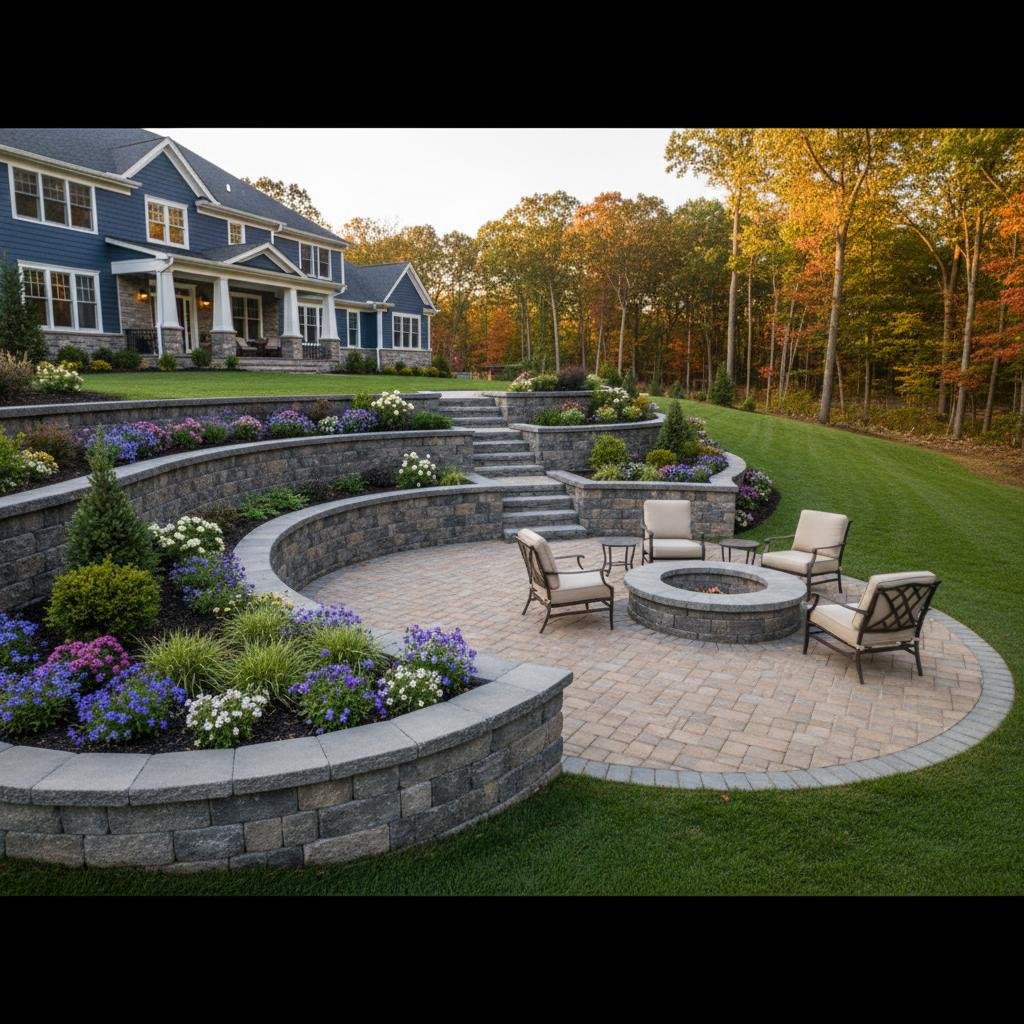
Homeowners dealing with elevated soil beds often benefit from engineered retaining walls that do double duty: holding back earth while safely filtering groundwater. Just as proper East Greenbush retaining wall drainage preserves multi-tiered suburban landscapes along Columbia Turnpike, hillside properties in Troy require backfilled aggregate, drainage sleeves, and weep holes through the face of modular stone. This configuration releases trapped moisture behind the wall, eliminating the pressure that causes costly structural failures.
Solving Cohoes Backyard Drainage in Tight Spaces
In compact properties throughout Cohoes, the primary challenge is finding adequate open ground to disperse water. Many properties are dominated by paved parking pads, tight concrete walkways, and older masonry that direct water directly toward neighboring basements. Resolving Cohoes backyard drainage issues requires surgical, space-efficient methods.
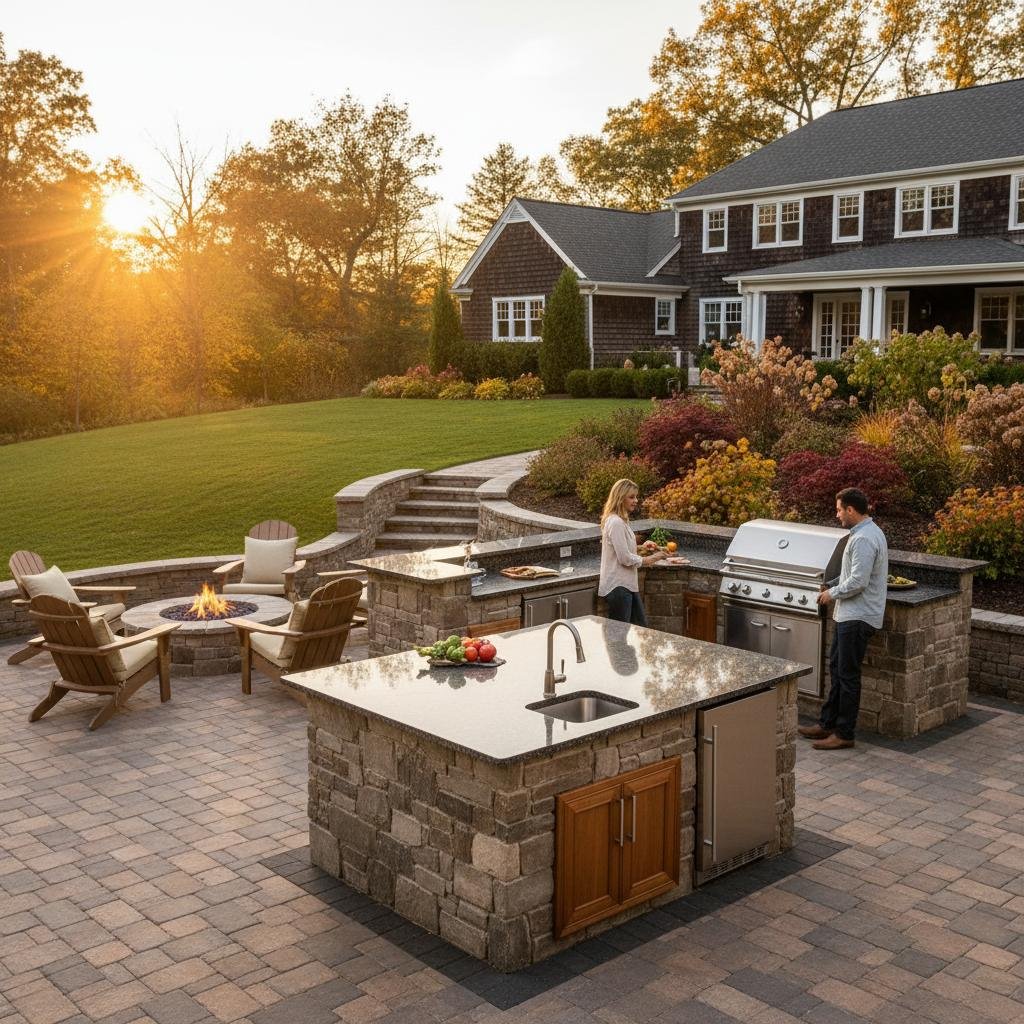
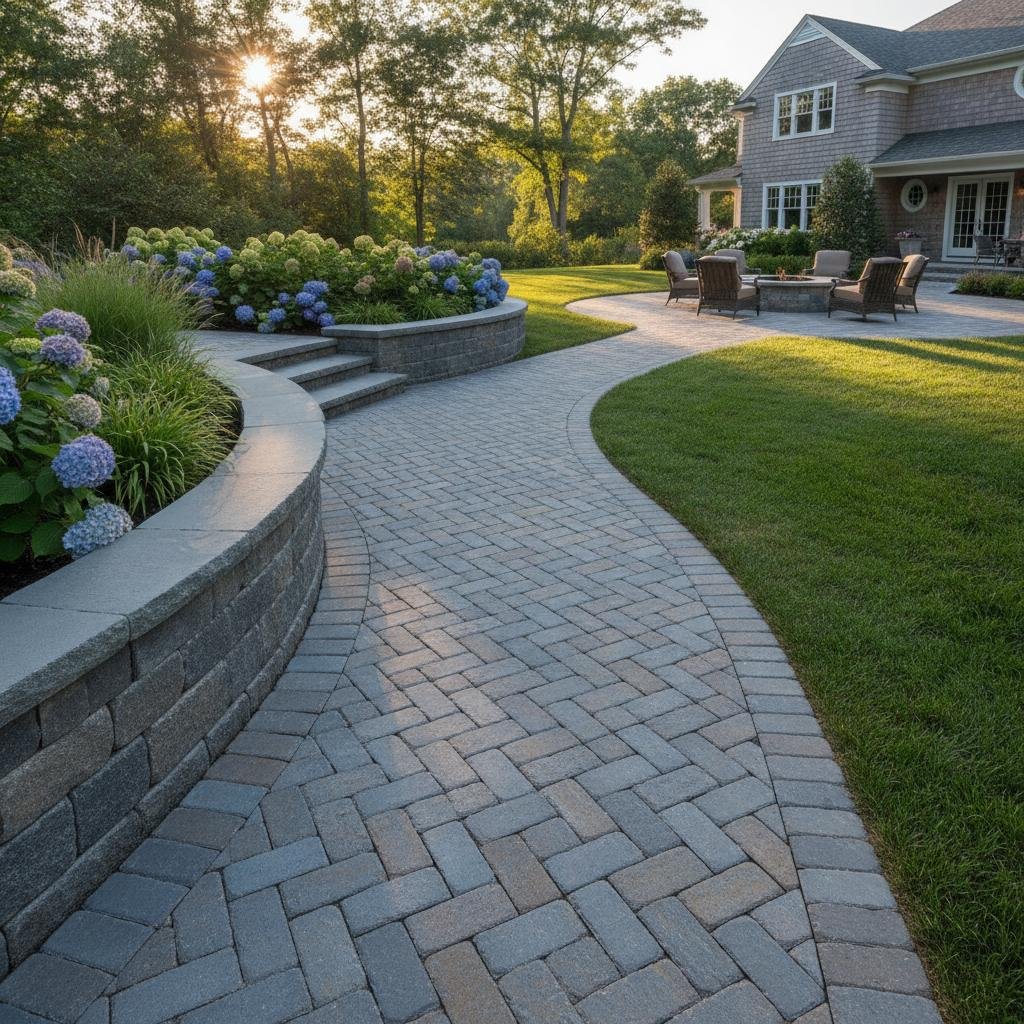
One of the most effective approaches is replacing impermeable, cracked concrete slabs with modern patio pavers. When built over an open-graded aggregate base or utilizing specialized permeable paver joints, these systems allow storm runoff to filter straight down into the subbase rather than cascading across the yard. This turns what was once a waterlogged mud pit into a functional entertainment space that actively absorbs rainfall.
For roofs lacking adequate municipal ties, hardscaping contractors can bury downspouts below the patio grade, connecting solid PVC pipe to an underground dry well or catch basin situated in an underutilized corner of the property. Runoff collects underground and percolates slowly into the aquifer, keeping your patio completely dry even in severe storms.
Addressing Water Runoff Beyond the City Center
Drainage headaches are not confined to the urban cores of Troy and Cohoes. As you head south and east through Rensselaer County, the challenges evolve based on lot sizes and soil profiles:
- Rensselaer Water Issues: Properties throughout Rensselaer often contend with flat, low-lying topography near the river combined with thick silt layers. Addressing persistent Rensselaer water issues frequently demands comprehensive perimeter trenching, catch basins at driveway low points, and sump pump extension lines to move collected water clear of the foundation.
- West Sand Lake Runoff: Further east in West Sand Lake, larger residential parcels often struggle with perched water tables and dramatic sheet runoff from natural woodland slopes. Managing these spaces involves broader land grading, larger rip-rap dry creek beds, and custom-designed retention swales designed to manage high volumes of spring snowmelt.
4 Practical Steps to Diagnose Your Yard’s Drainage Needs
Before breaking ground on an outdoor renovation, take these practical diagnostic steps during the next rainfall:
- Trace Your Downspout Flow: Check where your gutters discharge. If they drop water within five feet of your home’s foundation, install temporary extensions immediately to gauge if your basement moisture diminishes.
- Time Standing Water: Puddles that vanish within 24 hours of a rainstorm are generally harmless. Water that sits on lawns or patios for 48 hours or longer indicates severe soil compaction or an impermeable clay barrier that requires excavation.
- Inspect Elevation Differences: Stand at your property line and identify whether your yard sits in a natural basin relative to neighboring lots. If runoff from adjacent driveways or roofs flows onto your lawn, an interceptor trench or berm is necessary.
- Check Your Foundation Sills: Walk the perimeter of your house to verify that soil and mulch levels sit at least four to six inches below wooden sills and masonry weep screeds to prevent rot and pest intrusion.
Protect Your Property with Professional Drainage and Hardscaping
A wet, marshy yard diminishes your home’s value, damages landscaping, and poses real threats to structural foundations. Whether you need to stabilize a sliding hillside behind a multi-family home in Troy or eliminate standing water on a Cohoes patio, combining precise grading techniques with high-performance masonry delivers lasting protection.
The experienced team at Eldi Pro Hardscaping LLC specializes in diagnosing complex regional water issues and crafting long-term, attractive solutions that safeguard your investment. Contact our team today to schedule an on-site property evaluation and receive a free quote on custom drainage solutions, grading, and patio installations.