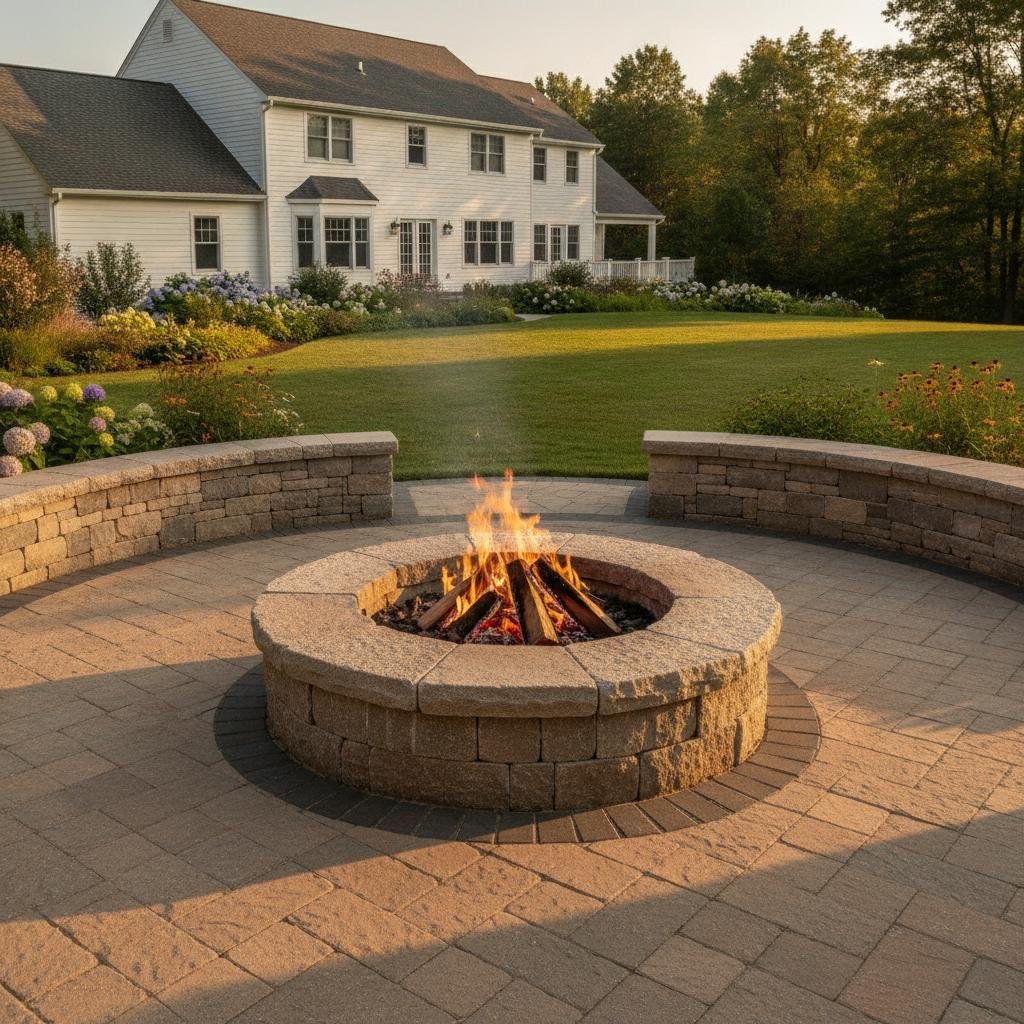

Capital Region winters do not treat outdoor living spaces gently. Between sub-zero temperature drops, heavy lake-effect snow squalls blowing down the Mohawk River corridor, and frequent mid-winter thaws, outdoor hardscaping endures intense structural stress. If you are planning an upgrade to your backyard or front entrance, selecting the best pavers Schenectady NY winters will spare you from heaving stones, spalling surfaces, and costly repairs down the road.
Poured concrete walkways and substandard patio slabs routinely crack across Schenectady County because water penetrates their porous surfaces, freezes, and expands by roughly 9% in volume. Paver systems handle this movement far better because their flexible joints flex rather than snap. However, not every paver can handle the dozens of freeze-thaw swings that hit Upstate New York between November and April. Here is what you must understand about material performance, local soil conditions, and installation methods to keep your project solid for decades.
The Anatomy of Winter Damage in the Mohawk Valley
Winter durability is determined largely by two factors: low water absorption and high compressive strength. When a stone absorbs melted slush that freezes overnight, internal hydraulic pressure breaks down the material from the inside out. This causes flaking, surface pitting (spalling), and corner fracturing.
In towns like Niskayuna and Glenville, winter weather is characterized by rapid temperature swings. A 45-degree rainy Tuesday in January can plummet to 10 degrees by Wednesday morning. If your hardscape absorbs water during the afternoon, that water expands in the pore structure overnight. Therefore, selecting proven Niskayuna freeze–thaw pavers requires choosing materials with an absorption rate below 5% and compressive strength exceeding 8,000 PSI (pounds per square inch).
Evaluating the Best Pavers Schenectady NY Winters Won’t Crack
Homeowners often weigh aesthetic beauty against raw durability. Fortunately, modern manufacturing and careful quarrying provide options that excel in both categories. When evaluating your next paver patios installation, these three categories lead the pack for winter resilience:
1. High-Density Interlocking Concrete Pavers
Engineered concrete pavers from top architectural hardscape manufacturers (such as Techo-Bloc, Unilock, and Cambridge) represent the gold standard for freeze-thaw endurance. Unlike standard poured concrete, these units are dry-cast under thousands of pounds of pressure, creating an ultra-dense slab that water cannot easily penetrate.
- Compressive Strength: Typically rated between 8,000 and 10,000+ PSI.
- Moisture Absorption: Well under 5%, preventing internal ice formation.
- Deicing Resistance: High resistance to deicing salts compared to standard concrete, especially when factory-treated with proprietary face-mix technologies.
- Application: Ideal for heavily trafficked driveways, pool decks, and expansive entertaining spaces.
2. Dimensional Natural Stone (Bluestone and Granite)
If you prefer an organic, classic Capital District aesthetic, natural stone work offers unmatched character. However, you must select the right stone cut. Thermal-finish Pennsylvania bluestone and domestic granites handle severe winter conditions exceptionally well because they possess tight crystalline structures.
Be cautious with “natural cleft” bluestone in untreated, shaded areas. Natural cleft stones split along natural sedimentary planes, which can occasionally trap moisture and flake (delaminate) if water gets beneath the layers during repetitive freezes. Thermal-finish bluestone, by contrast, has been heat-treated to create an even, non-slip texture that seals surface fissures and sheds water readily.
3. High-Fired Hardscape Clay Bricks
Genuine vitrified clay paving bricks should not be confused with soft decorative red bricks used for interior chimneys. High-fired street pavers are baked in kilns at temperatures exceeding 2,000 degrees Fahrenheit until the clay minerals fuse into a glass-like state. This vitrification process makes the brick almost completely impervious to moisture, chemical salts, and sun fading.
Vitrified brick pavers make handsome, enduring front entrance paths and traditional garden walkways throughout historic neighborhoods like the GE Realty Plot in Schenectady.
Schenectady Paver Material and Soil Realities: Rotterdam to Clifton Park
Selecting a durable paver is only half the battle. In reality, frost damage rarely starts in the paver itself; it starts in the soil below. Your choice of Schenectady paver material will fail if the sub-base cannot evacuate moisture away from the frost zone.
Schenectady County and neighboring Saratoga County present dramatically varied soil conditions:
- Rotterdam and Schenectady: Many properties sit over dense, glaciated clay or river basin silt. Clay holds moisture like a sponge. When frozen, clay expands upward dramatically, creating the notorious “frost heave” that tilts steps and pushes retaining walls out of plumb.
- Niskayuna and Ballston Lake: Soils here alternate between rocky glacial till and pockets of dense clay loam. High water tables near natural runoff paths require deep drainage aggregate to protect paved surfaces.
- Clifton Park: Developing a long-lasting Clifton Park winter patio often requires navigating dense clay subgrades mixed with seasonal surface runoff, where proper grading away from the home foundation is critical.
To prevent winter shifting across Rotterdam, Glenville, and Ballston Lake, excavation must clear all organic topsoil down to stable subgrade. A woven geotextile stabilization fabric should separate the native clay from the crushed stone foundation. From there, installers should pack at least 6 to 8 inches of dense-graded aggregate (such as crusher run or open-graded crushed stone) compacted in 2-inch lifts. Without this mechanical foundation, frost will displace even the heaviest stone slabs.
Crucial Winter Care: Shoveling, Salt, and Maintenance
Even the highest-grade paver installation can suffer aesthetic damage if subjected to improper winter care. Protecting your hardscape investment requires smart maintenance habits from late fall through spring:
Ditch the Metal Shovel
Steel-bladed snow shovels, heavy metal ice chippers, and steel snowblower augers will scratch paver finishes, chip beveled paver edges, and strip protective surface sealers. Always use heavy-duty plastic shovels or poly-edged snowblower blades when clearing walks and outdoor patios.
Choose Paver-Safe Deicing Products
Standard rock salt (sodium chloride) is notorious for deteriorating cementitious materials, burning surrounding lawn turf, and degrading stone sealers. Rock salt melts ice only down to roughly 15 degrees Fahrenheit, leaving behind a brine that repeatedly freezes and thaws inside micro-crevices.
Instead, choose Calcium Magnesium Acetate (CMA) or pure Calcium Chloride. These products melt ice at significantly lower temperatures, present far less chemical reactivity to concrete aggregates, and cause far less stress to the joint sand stabilizing your stones.
Invest in Professional Sealing & Maintenance
Routine sealing & maintenance acts as an impenetrable shield against winter water absorption and deicing chemical intrusion. High-grade penetrating or film-forming sealers lock out standing slush and keep polymeric joint sand intact, preventing weeds and moisture washouts when the spring melt arrives.
Build a Winter-Resistant Hardscape for Your Home
Choosing the right pavers for an Upstate New York climate does not mean compromising on style. Modern manufactured stone and premium thermal bluestone give you endless design freedom while easily enduring sub-zero temperatures, heavy snow accumulation, and springtime mud seasons.
Are you ready to build a freeze-proof patio, walkway, or driveway on your property? The team at Eldi Landscaping LLC understands local soil hydrology and cold-weather installation standards across Schenectady, Niskayuna, Clifton Park, and the wider Capital Region. Contact us today for a free quote, and let’s design an outdoor space built to last through every New York winter.