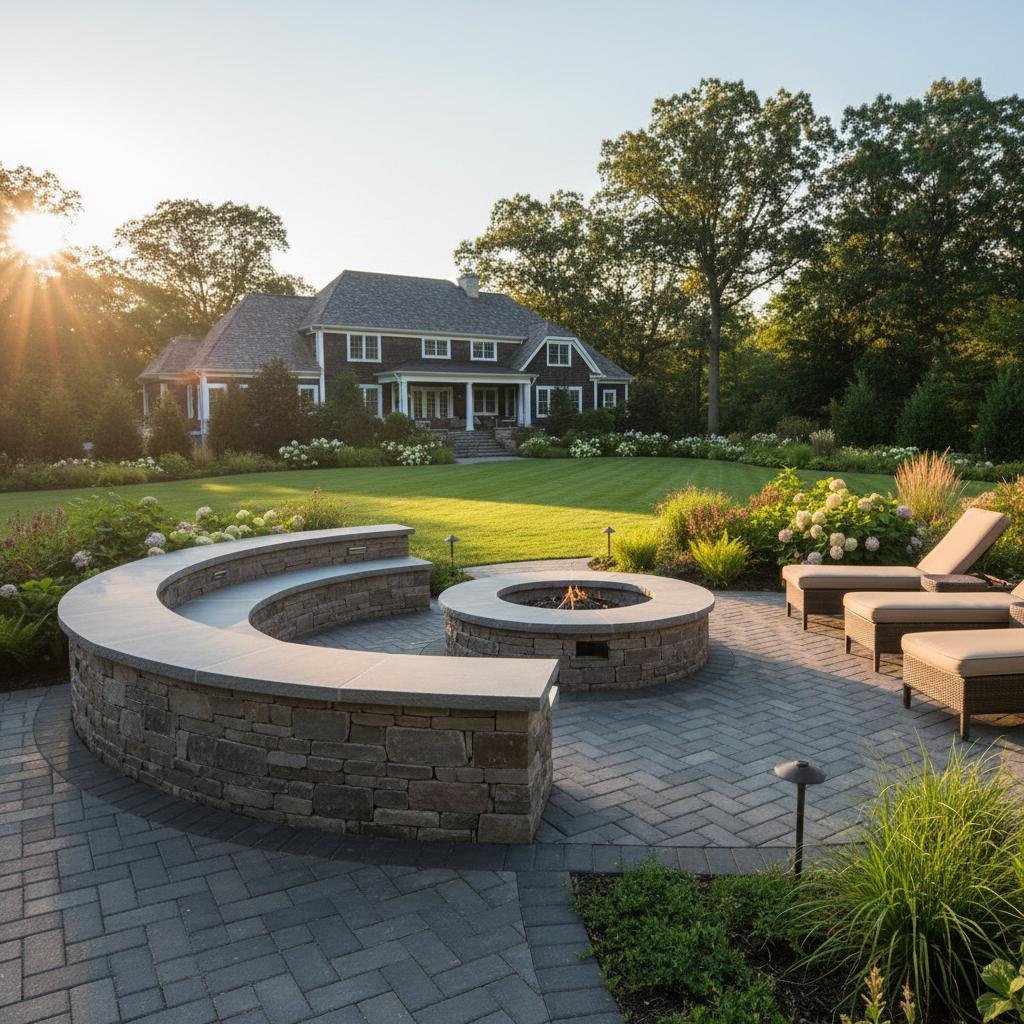

Deciding to upgrade your outdoor living space is exciting, but pinpointing the best season for hardscaping Albany NY homeowners should target can make or break your project timeline. Between frozen winter ground and heavy spring thaws, upstate New York presents unique climate hurdles. Whether you want a sprawling bluestone terrace in Loudonville, engineered terrace steps in Slingerlands, or a complete backyard overhaul in Latham, timing your build properly ensures structural durability, smooth excavation, and minimal disruption to your daily routine.
The Albany Landscaping Season: An Overview of Upstate Conditions
The active Albany landscaping season typically spans from mid-April through late November. Because hardscaping requires heavy excavation, sub-base compaction, and precise leveling, ground conditions dictate when work can safely proceed. Soil that is frozen or saturated with water cannot be properly compacted. Attempting to set heavy stone or pavers on wet subgrade leads to shifting, settling, and drainage failures down the road.
Understanding how the seasons behave in Albany County helps you decide not just when you want the finished product ready, but when the actual installation should take place.
Spring Hardscaping: Pros, Cons, and Soil Realities
Spring is the time of year when most property owners start thinking about backyard improvements. The snow melts, the days grow longer, and homeowners in Delmar and Guilderland look out at muddy yards ready for a refresh.
The Advantages of Spring Builds
- Early completion: If your project wraps up in May or early June, your new outdoor space is ready to enjoy for the entire summer.
- Plant integration: Spring is the ideal window to combine stonework with fresh sod, mulch, and perennial plantings, allowing vegetation to establish alongside your new layout.
The Drawbacks to Keep in Mind
The primary challenge in spring is ground saturation. Albany and surrounding areas often experience prolonged rain and lingering frost in April. Clay-heavy soils, common in neighborhoods around Guilderland and Latham, hold moisture stubbornly. Heavy machinery can rut your lawn if the ground has not dried sufficiently, and compaction must wait until moisture levels drop. Additionally, contractor schedules fill up quickly between March and May, leading to extended lead times if you wait until the weather warms up to call.
Summer Hardscaping: Maximum Daylight and Dry Conditions
Summer offers the most predictable weather window across the Capital Region. Long daylight hours and consistently warm temperatures allow installation crews to work efficiently with minimal rain delays.
Why Summer Works Well
By late June, soil conditions are ideal. The ground is dry, making it easy to excavate, grade, and set durable gravel bases for heavy installations. This stability is critical when building engineered retaining walls or laying precision interlocking patio pavers that require perfectly level bedding sand.
Potential Summer Downsides
The main trade-off of a summer build is project overlap with your prime outdoor entertaining season. Construction involves excavation machinery, pallets of materials on your driveway, and temporary noise. If you want to use your backyard for July barbecues, an active construction site can put those plans on hold. Furthermore, pool projects—such as dedicated pool patio pavers—require advance coordination so masonry work aligns seamlessly with pool installation dates.
Fall: The Hidden Best Season for Hardscaping Albany NY
Industry professionals frequently consider autumn—from September through early November—the premier window for hardscape construction in the Capital Region. While many homeowners assume outdoor projects wind down after Labor Day, fall provides several distinct advantages.
1. Stable Ground and Crisp Weather
Fall weather in Delmar and Loudonville brings crisp, dry air and comfortable working temperatures. The ground is thoroughly dried out from summer, eliminating the mud challenges of spring. Polymeric joint sand sets up cleanly in moderate humidity, and masonry mortar cures under steady, mild temperatures rather than under scorching summer heat.
2. Minimal Disruption to Outdoor Living
By September, the peak outdoor pool and barbecue season is tapering off. Having crews build a timber deck, set natural boulder steps, or install custom fire pits during the fall means your yard can undergo transformation without interrupting summer family gatherings. Once completed, features like fire pits and outdoor fireplaces extend your enjoyment straight into November and December.
3. Next-Spring Readiness
When you complete your project in autumn, your landscape settles naturally through the winter. As soon as the first warm weekend arrives in April, your finished patio is immediately ready for outdoor furniture—no waiting on contractor spring backlogs or dealing with muddy construction zones when you want to be outdoors.
Navigating Guilderland Hardscape Timing and Lead Times
Proper planning requires knowing the difference between your build date and your planning date. Smart Guilderland hardscape timing starts months before any shovel touches the dirt. Designing a master plan, finalizing material selections—such as choosing between manufactured concrete pavers and authentic flagstone—and acquiring any required municipal permits takes anywhere from two to six weeks.
Here is a practical roadmap for scheduling your hardscape build:
- For a Spring Completion (May/June): Reach out for site visits and design estimates in January or February. Lock in your contractor schedule by early March.
- For a Mid-Summer Build (July/August): Finalize your plans and secure material orders by late April or early May.
- For an Autumn Installation (September/October): Begin consultations in June or July. This gives ample time to finalize 3D layouts, source specialty quarry stone, and secure your build spot before end-of-year schedules close out.
When to Install Patio Delmar: Evaluating Your Property’s Microclimate
If you are deciding exactly when to install patio Delmar properties, consider the microclimate and topography of your specific lot. Historic properties in Old Delmar or mature wooded lots in Slingerlands often feature extensive shade canopies and shallow root systems that hold groundwater longer in the spring than sunny, open lots in Latham. On shaded parcels with dense clay, targeting late summer or early fall helps crews excavate cleanly without damaging surrounding tree roots or creating deep soil ruts.
Conversely, if your site requires extensive slope stabilization or terraced access stairs, getting foundation footings poured before the deep ground frost sets in—usually by late November in Albany County—is non-negotiable. Freezing temperatures halt concrete work and prevent jointing sand from curing properly.
Comparing Your Options: Season by Season
| Season | Soil & Weather Conditions | Contractor Availability | Best Suited For |
|---|---|---|---|
| Spring (April–May) | Cool, prone to heavy rain, wet/soft ground | Fills up fast; highest inquiry volume | Homeowners wanting outdoor spaces ready for peak summer |
| Summer (June–August) | Warm, long days, dry and stable ground | High activity; tight scheduling | Pool surrounds, large-scale multi-tier patios, structural steps |
| Fall (Sept–Nov) | Mild, dry, crisp air, stable subgrades | Moderate; easier scheduling flexibility | Fire pit zones, paver walkways, retaining walls, full landscape resets |
Plan Your Capital Region Hardscape Project with Eldi Pro Hardscaping
Every season has clear advantages, but booking your project early ensures you secure your preferred installation window rather than waiting on weather delays or booked-up construction calendars. Whether you envision an expansive outdoor kitchen in Loudonville, durable stone retaining walls in Slingerlands, or a welcoming paver walkway in Delmar, our team provides expert guidance tailored to regional soil and climate conditions.
Contact the team at Eldi Pro Hardscaping today to discuss your vision and schedule a free consultation for your upcoming outdoor project.